
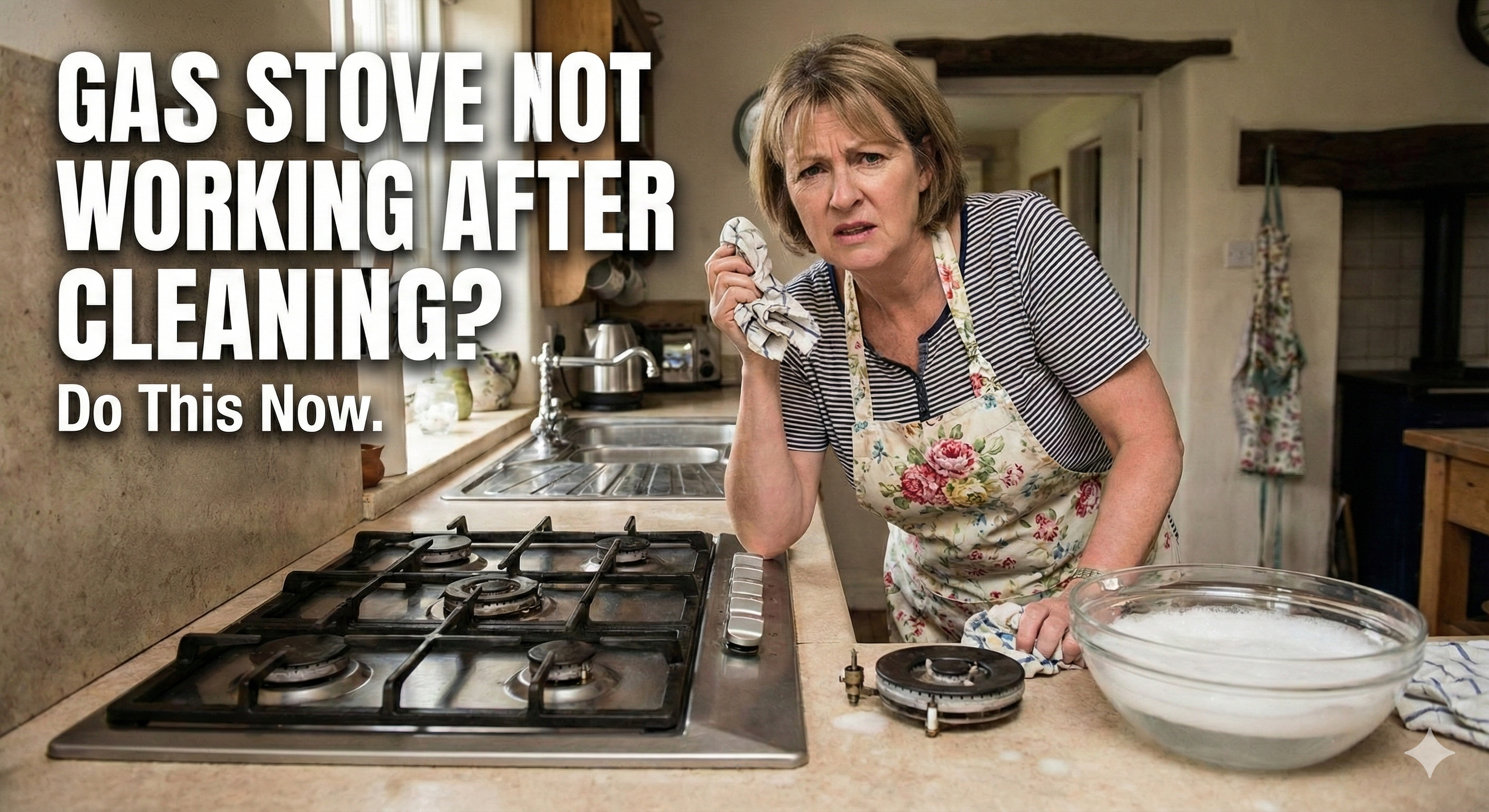
Gas stove not working after cleaning is way more common than people admit. You clean your stove to make it look nice, turn the knob expecting a normal flame… and suddenly nothing works. The burner won’t light, it keeps clicking, the flame is weak, or the stove smells strange. That’s when panic kicks in.
Here’s the reassuring truth:
In most cases, a gas stove that stops working after cleaning is not broken. It’s reacting to moisture, misaligned parts, or residue left behind during cleaning. These are fixable issues—often in minutes—if you know exactly what to check.
Let’s walk through what to do right now, step by step, in the safest order.
Contents

Do This First (Immediate Check) – Gas Stove Not Working After Cleaning
Before trying random fixes, stop and do this:
Turn the burner OFF completely.
Wait a minute.
Open a window for ventilation.
If you smell strong gas, stop troubleshooting and let the kitchen air out. If there’s no strong smell, continue below.
Why Gas Stoves Stop Working After Cleaning
Cleaning introduces three things that gas stoves hate:
- Moisture
- Misalignment
- Residue buildup
Even a small amount of water or cleaner in the wrong place can block ignition or gas flow. The stove isn’t damaged—it’s just temporarily confused.
Step 1: Check Burner Cap Alignment (Most Common Fix)
This is the number one reason stoves stop working after cleaning.
When you remove burner caps to wipe the stove, they often go back slightly off-center. Even a small misalignment can stop ignition completely.
What to do
Turn the burner off and let it cool. Remove the grate and lift the burner cap. Place it back carefully so it sits flat and steady. It should not wobble.
Try lighting the burner again.
Many stoves start working instantly after this step alone.
Step 2: Dry Everything (Moisture Is the Biggest Culprit)
Water from cleaning sprays, wet cloths, or spills can easily get trapped around:
- Burner bases
- Igniters
- Burner ports
Even if the surface looks dry, moisture can hide underneath.
What to do
Remove the burner cap. Use a dry towel to absorb any visible moisture. Then leave the burner area open for 20–30 minutes to air dry.
If you’re in a hurry, gently use a hair dryer on low heat. Don’t overheat the parts—just help the moisture evaporate.
Once fully dry, reassemble and test again.
This step alone fixes a huge percentage of “stove not working after cleaning” issues.

Step 3: Clean Residue the Right Way (Leftover Cleaner Can Block Ignition)
Sometimes the problem isn’t water—it’s cleaner residue.
Soap, degreaser, or chemical sprays can leave a thin film on burner parts. That film interferes with gas flow and ignition.
What to do
Remove burner parts again and wipe them with a clean, damp cloth (just water). This helps remove leftover cleaner. Then dry everything completely before reassembling.
Avoid spraying cleaners directly into burner holes or igniter areas in the future.
Non-Scratch Scrub Sponge
Using the right cleaning tool helps prevent residue buildup.
Step 4: Clean Burner Ports (Cleaning Can Push Dirt Into Them)
Ironically, cleaning can make burner ports worse.
When you wipe the stove, grease and crumbs can get pushed into the tiny burner holes. This restricts gas flow and prevents proper ignition.
What to do
Let the burner cool fully. Remove the burner cap and head. Use a toothbrush to gently scrub around the burner holes. If some ports are blocked, use a toothpick carefully to clear them.
Make sure everything is dry before putting it back together.
Burner Port Cleaning Tool
Clogged ports are a silent reason burners stop working after cleaning.
Step 5: Check the Igniter (Wet or Dirty = No Spark)
If your stove clicks but doesn’t light—or doesn’t click at all—the igniter may be wet or dirty.
What to check
Turn the burner on briefly and watch for a spark. If the spark looks weak, inconsistent, or missing, turn it off again.
What to do
Clean around the igniter gently with a dry toothbrush. Do not soak it with water. Make sure it’s fully dry before trying again.
If the igniter looks cracked or damaged, it may need replacement.
Replacement Igniter Electrode
Step 6: Check the Power (Gas Stoves Still Need Electricity)
Many people forget this.
Even though your stove uses gas, the ignition system usually needs electricity. Cleaning can sometimes loosen the plug or trip a breaker.
What to do
Check if the stove is plugged in properly. Test another burner. Check the circuit breaker if nothing clicks.
If all burners suddenly stopped clicking after cleaning, power is likely the issue.
Step 7: Try Manual Lighting (Only If You Feel Comfortable)
This is a test, not a long-term solution.
If the igniter isn’t working but gas is flowing, manual lighting can confirm it.
Turn the knob slightly on and carefully light the burner with a long lighter. If it lights instantly, the issue is ignition-related—not gas flow.
Long Reach Lighter
If manual lighting doesn’t work either, stop troubleshooting and reassess gas supply.
Mistakes That Make the Problem Worse
Many people accidentally make things worse after cleaning.
Avoid these mistakes:
Continuing to click the igniter repeatedly
Spraying cleaner directly into burner holes
Reassembling parts while still wet
Scraping burner ports with sharp metal
Slow, dry, and careful always works better.
Gas Stove Smells Like Burning Plastic – 5 Scary Causes (And What To Do Next)
Tools That Help (Optional)
Non-Scratch Scrub Sponge
Burner Port Cleaning Tool
Replacement Igniter Electrode
Gas Leak Detector Spray
When to Stop and Call a Professional
Call a technician if:
The stove still doesn’t work after drying and cleaning
Multiple burners fail at once
You smell gas even when the stove is off
The igniter clicks nonstop or not at all
If something feels unsafe, trust that feeling.
Final Thoughts
Gas stove not working after cleaning is frustrating—but it’s rarely serious. Most of the time, it comes down to moisture, misalignment, or residue. Start with drying everything completely, then check burner alignment and cleanliness.
Once the stove is properly reassembled and dry, it usually comes back to life like nothing ever happened.
Cleaning should make your stove better—not unusable. Now you know exactly what to do when it doesn’t.