
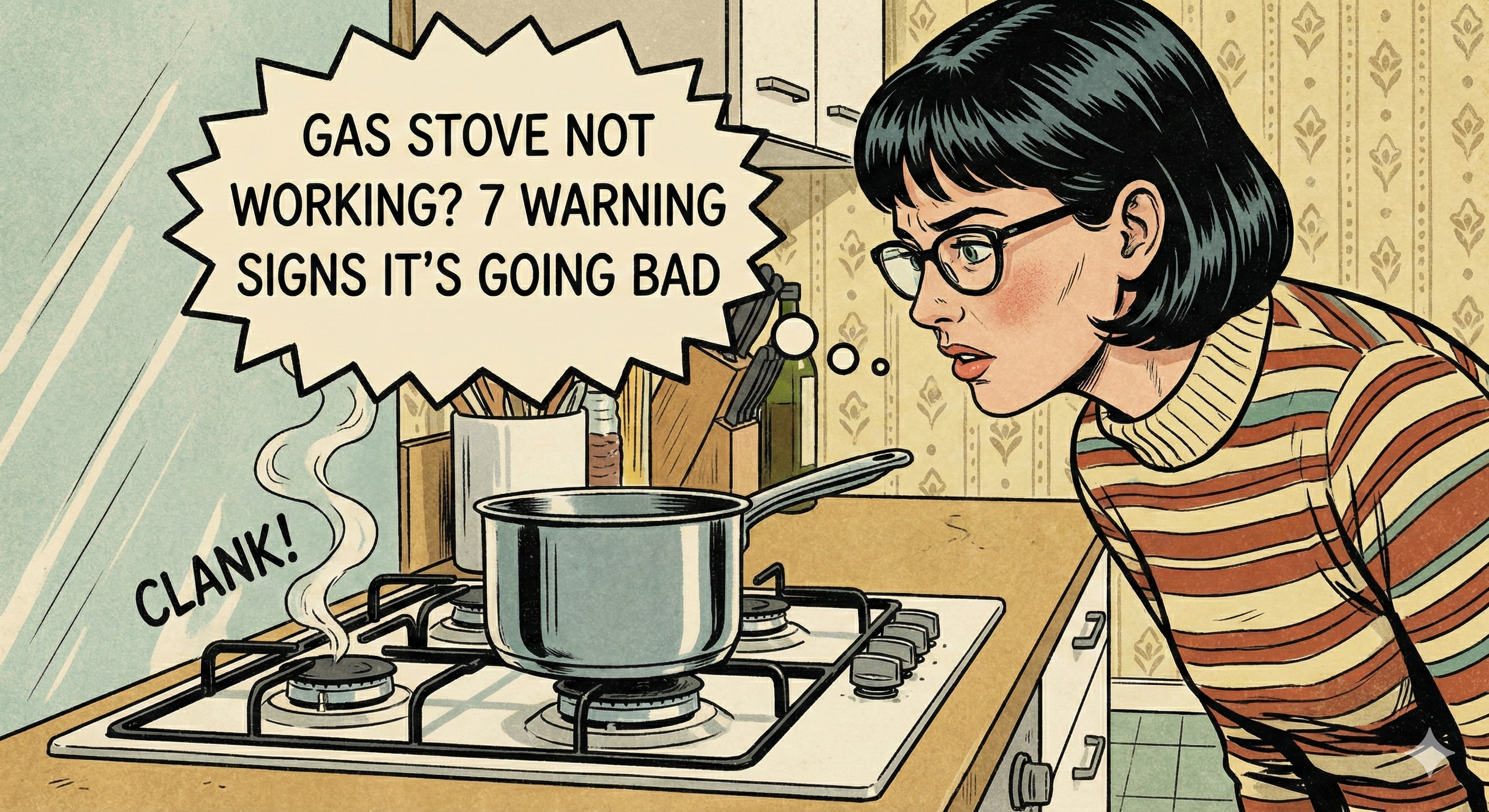
Gas stove not working is one of those problems people tend to ignore at first. One burner acts weird, the flame looks off, or cooking suddenly takes longer—and we tell ourselves it’s “nothing serious.” But over time, small issues can turn into repeated breakdowns, safety risks, or a stove that just isn’t worth fixing anymore.
The truth is, gas stoves don’t usually fail overnight. They show warning signs first. If you know what to look for, you can decide whether a simple repair will fix the problem—or if your stove is slowly reaching the end of its life.
In this guide, I’ll walk you through 7 clear warning signs that your gas stove may be going bad, what each sign really means, and what you should do next.
Contents
Try This First (Quick Reality Check) – Gas Stove Not Working
Before assuming the worst, do this simple test:
Try lighting a different burner.
If only one burner has issues, it’s often a cleaning or part problem.
If multiple burners are acting up, the stove itself may be struggling.
Now let’s look at the real warning signs.

Warning Sign #1: Burners Struggle to Light or Don’t Light at All
One of the earliest signs of a failing gas stove is when burners stop lighting reliably.
You may notice:
The burner clicks repeatedly before lighting.
It lights only after several tries.
Sometimes it doesn’t light at all.
At first, this can be caused by dirt or moisture. But if the problem keeps coming back even after cleaning and drying, it often points to worn igniters, failing switches, or internal ignition problems.
When this starts happening across more than one burner, it’s a strong signal the stove is aging.
Warning Sign #2: Weak or Uneven Flame That Won’t Improve
A healthy gas stove should produce a strong, even flame. If your stove flame stays weak no matter what you do, that’s not normal.
Signs include:
Low heat even on high settings.
Uneven flames around the burner.
Food taking much longer to cook.
Cleaning burner ports usually fixes this early on. But if the flame stays weak after proper cleaning and alignment, internal gas flow or pressure problems may be developing.
That’s when performance slowly declines and daily cooking becomes frustrating.

Warning Sign #3: Flame Color Keeps Changing (Yellow or Orange Flames)
Occasional orange tips can be harmless. But if your flame is mostly yellow or orange all the time, that’s a warning sign.
This usually means:
Gas is not burning efficiently.
The air-to-gas mixture is off.
Internal components may be worn or misaligned.
Persistent yellow flames can lead to soot buildup, poor heating, and wasted gas. If cleaning doesn’t fix it, your stove may be past its prime—or in need of professional attention.
Warning Sign #4: Clicking Sounds That Don’t Stop
If your stove keeps clicking even after the burner lights—or clicks when the burner is off—that’s not something to ignore.
This usually points to:
Faulty burner switches
Worn igniter components
Electrical issues inside the stove
At first, this might happen occasionally. Over time, it often becomes constant. Continuous clicking is a sign that parts are failing, not just dirty.
Warning Sign #5: Strong Smells (Gas or Burning Plastic)
A stove that’s going bad often starts producing unusual smells.
Pay attention if you notice:
Gas smell even when the stove is off
Burning plastic or electrical smells
Sharp chemical odors during cooking
Some smells come from grease or spills—but if odors persist after cleaning, it can signal gas leaks, wiring issues, or overheating internal parts.
This is one warning sign you should never ignore. Safety always comes first.
Warning Sign #6: Multiple Burners Acting Up at the Same Time
When one burner fails, it’s usually a local issue.
When two or more burners start acting strange, it often means the stove itself is the problem.
Examples:
Several burners heat poorly
Multiple igniters fail
Flame size changes randomly across burners
This usually points to shared components like the gas regulator, ignition system, or internal gas lines—all signs of an aging stove.
Warning Sign #7: Repairs Keep Coming Back
This is the biggest sign of all.
If you find yourself fixing:
The same burner again and again
Repeated ignition problems
Constant flame or heating issues
Then the stove may no longer be reliable.
Occasional maintenance is normal. Repeated failures are not. At some point, repair costs and time become higher than the value of keeping the stove.
Common Mistake People Make
Many people keep using a failing gas stove because “it still works most of the time.”
But gas appliances don’t usually get better on their own. Ignoring warning signs often leads to bigger problems, higher repair bills, or safety risks later.
Gas Stove Not Working After Cleaning? Do This Now (Before You Panic)
Tools That Help (Optional)
Gas Leak Detector Spray
Burner Port Cleaning Tool
Replacement Igniter Electrode
Non-Scratch Scrub Sponge
When to Repair vs When to Replace
Repair may make sense if:
Only one burner has issues
The stove is relatively new
The fix is simple and affordable
Replacement is often smarter if:
Multiple burners are failing
Problems keep returning
Internal components are wearing out
Safety concerns are involved
A professional inspection can help you decide, but your daily experience matters too.
Final Thoughts
Gas stove not working is rarely a sudden failure. It’s usually a series of warning signs that build up over time. Burners that won’t light, weak heat, strange flame colors, constant clicking, and unusual smells are all your stove’s way of telling you something isn’t right.
If you’re seeing more than one of these signs, it may be time to stop patching the problem and think long-term. Whether that means a serious repair or replacing the stove, recognizing the warning signs early can save you stress—and keep your kitchen safe.