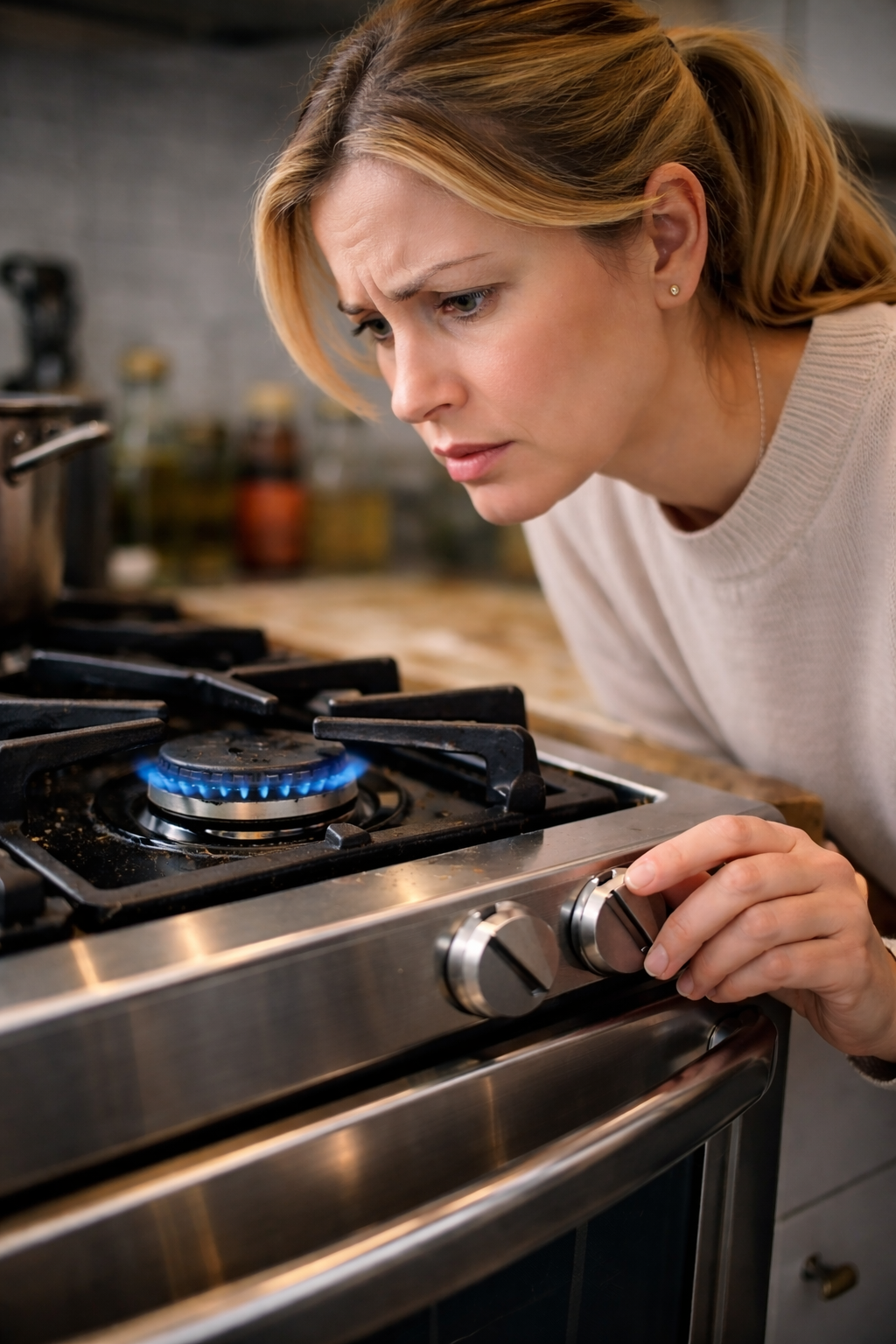
Gas stove low flame is one of those problems that slowly drives you crazy. Cooking takes longer, water takes forever to boil, and your food just doesn’t cook the way it normally does. At first, you might think it’s just “one bad day” for the stove… but if the flame stays weak every time you cook, something is definitely off.
The good news is this: a low flame usually has a clear cause. Most of the time it’s not some expensive “your stove is dying” issue. It’s usually grease buildup, clogged burner ports, a burner cap out of place, or even your gas pressure being slightly off.
In this guide, I’ll show you exactly what causes a weak flame, how to fix it safely, and what to do if the problem keeps coming back. Let’s get your burner back to full power.
Contents
Try This First (2-Minute Fix) -Gas Stove Low Flame
Before we go deep, do these quick checks:
Make sure the burner cap is sitting flat. Clean any visible crumbs around the burner. Then turn the burner off, wait 10 seconds, and relight it.
If the flame is still low, try one more burner.
If all burners are low, it may be a gas supply or pressure issue.
If only one burner is low, it’s usually a burner cleaning or alignment issue.

What “Low Flame” Usually Means
A healthy gas flame should look:
- Even and steady
- Mostly blue
- Strong enough to cover the burner ring
A low flame often means:
- Gas flow is restricted
- Burner holes are clogged
- The burner isn’t assembled correctly
- Gas pressure is low
Sometimes the flame is low and orange, sometimes low and weak blue, and sometimes it even flickers. Each version points to a slightly different cause.
Fix #1: Check the Burner Cap and Burner Head Alignment
This is simple, but it matters more than people think.
If your burner cap is even slightly off-center, the gas won’t spread evenly. Instead of a full strong ring of flame, you’ll get a weak flame on one side or a low flame all around.
Turn the burner off, remove the grate, lift the cap, and place it back properly. It should sit flat and steady. If the burner head underneath is removable, make sure that part is positioned correctly too.
Now light the burner again and check the flame.
A lot of people spend days living with a weak flame when the fix is literally just re-seating the cap.
Fix #2: Clean the Burner Ports (Clogged Holes = Weak Flame)
Burner ports are those tiny holes where gas comes out. When they get clogged, gas can’t flow evenly, and you get a low flame or a partial flame.
This happens from:
- Grease buildup
- Sauce spills
- Burned food crumbs
- Sticky residue from cooking oils
To fix it safely:
Let the burner cool completely. Remove the burner cap and burner head. Use a dry toothbrush to scrub around the holes. If you see stubborn blockage inside the ports, use a toothpick to clear them gently. Wipe everything clean and make sure it’s fully dry before putting it back.
Once you reassemble the burner, light it again.
Most of the time, you’ll immediately see a stronger flame.
If you cook often, this tool makes burner maintenance much easier.
Fix #3: Low Flame After Cleaning? It Might Be Moisture
Sometimes the burner becomes low right after you cleaned your stove. That’s because moisture can block gas flow or affect ignition.
Even if everything looks dry, water can hide around the burner base or igniter area. That moisture can cause an uneven or weak flame.
Here’s what to do:
Turn the burner off and remove the cap. Leave everything open for 20–30 minutes to air dry. You can gently wipe it with a dry towel. If you want to speed it up, use a hair dryer on low heat, but don’t overheat the parts.
Once it’s fully dry, reassemble and relight.
This fix is easy, and it’s one of the most common reasons people suddenly get a weak flame after cleaning day.
Fix #4: Your Air Shutter May Need Adjustment (If You Have an Older Stove)
This one applies more to older gas stoves. Some burners have an air shutter that controls how much air mixes with the gas. If the air-to-gas mixture is off, your flame can become weak, lazy, or orange.
If your flame looks:
- Low and yellow/orange
- Soft and flickering
- Not sharp and blue
It may be an air mixture problem.
Adjusting an air shutter usually involves removing the burner and making a small adjustment. If you’re comfortable, you can look up your stove model and check how the shutter works. But if you’re unsure, it’s better to leave this step to a professional.
Still, it’s worth knowing this exists—because many people clean everything and still get a low flame, and this is why.
Fix #5: Gas Pressure Issue (If ALL Burners Are Low)
This is important:
If every burner on your stove is low, the problem is usually not a dirty burner. It’s more likely a gas supply issue.
Possible causes include:
- The gas shutoff valve is partially closed
- Your gas regulator is failing
- Propane tank is low (if you use propane)
- Supply pressure issue from the gas line
Check your shutoff valve first. It should be fully open.
Then try another gas appliance if you have one (like a heater or dryer). If everything gas-related seems weak, you may need to contact your gas provider.
If you use propane, check the tank level.
Some people try to “live with it” but low gas pressure can affect performance and safety. It’s better to get it checked.
Fix #6: Flame Is Low Only on ONE Burner? That Burner May Be Damaged
If one burner stays weak even after cleaning, it might be worn out or damaged.
Look for:
- Burner head cracks
- Warped burner cap
- Heavy corrosion
- Uneven flame pattern
Sometimes parts just wear out over time, especially if the stove is older.
If you can swap burner caps between burners (on some stoves), try switching caps to see if the problem moves with the cap. That’s a quick way to confirm if the cap is the issue.
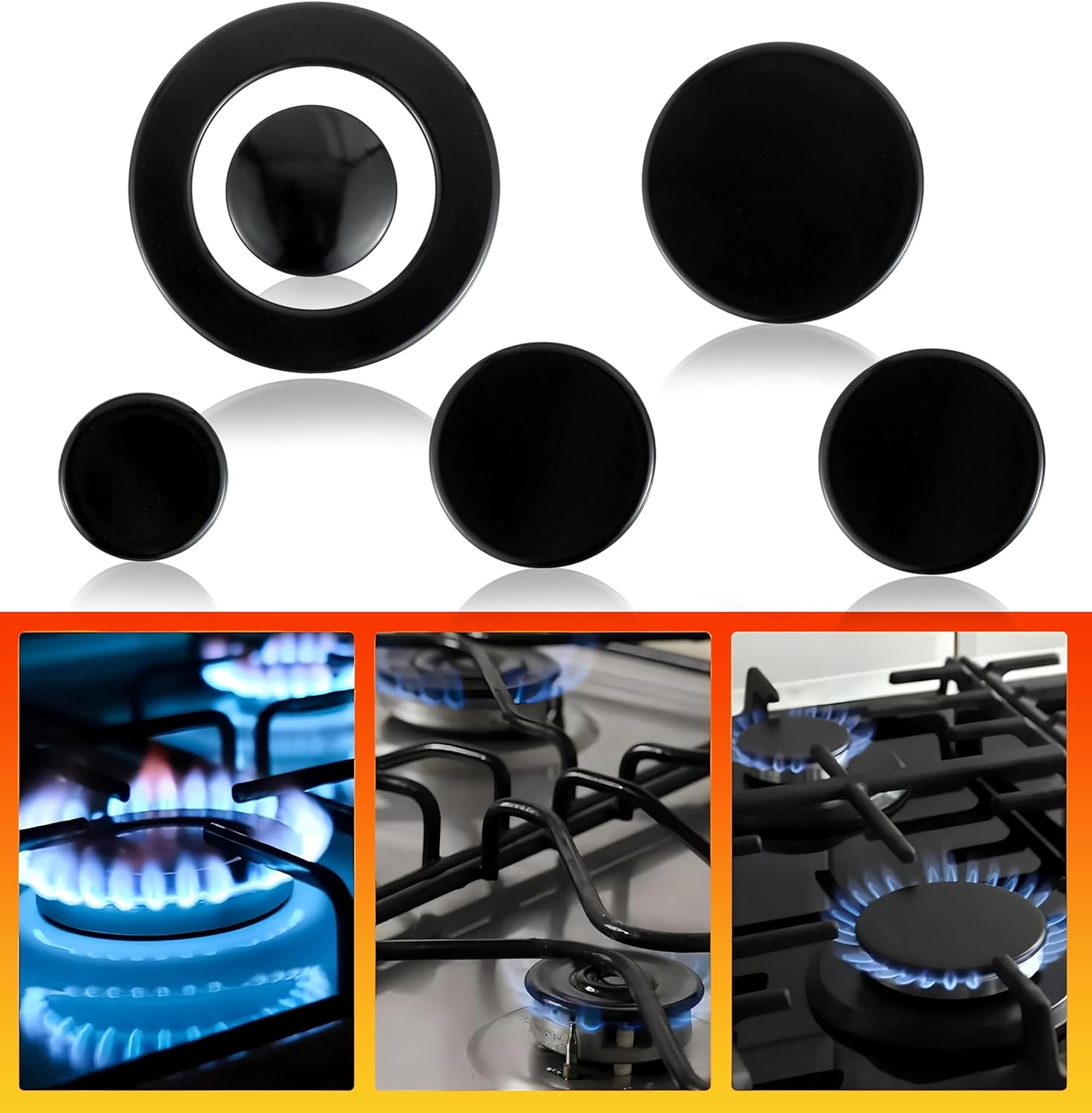
If you confirm a part is the problem, replacement can bring the stove back to normal instantly.
Replacement Burner Cap Set
Fix #7: The Regulator Could Be Failing (Weak or Unstable Flame)
A bad regulator can cause a weak flame, flames that fluctuate, or burners that feel underpowered.
You might notice:
- Flame is low even on “High”
- Flame changes size randomly
- Stove takes longer to heat than before
If you suspect a regulator issue, it’s best to call a professional. Regulators deal directly with gas pressure, and you don’t want to guess.
But in terms of troubleshooting, this is the step you consider when cleaning and alignment did not help at all.
Mistakes That Make Low Flame Worse
Here are a few mistakes that keep the low-flame problem going:
People only wipe the surface but never clean burner ports. They spray cleaner directly into burner openings. They ignore yellow flame thinking it’s normal. Or they keep adjusting knobs without fixing the real cause.
Instead, do consistent burner maintenance every few weeks, especially if you cook daily. A clean burner equals a strong flame.
When You Should Call a Technician
Call a professional if:
All burners suddenly become low at the same time. You suspect a regulator or gas pressure issue. Your flame stays yellow/orange even after cleaning. Or you smell gas and the stove is acting unpredictable.
When it comes to gas, it’s always better to play it safe.
Final Thoughts
Gas stove low flame is annoying, but it’s usually fixable. Start with the simple steps: align the burner cap, clean the burner ports, and make sure everything is dry. Those three fixes solve low flame issues for most people.
If all burners are low, look at gas supply and pressure issues next. And if nothing changes, a technician can quickly confirm whether a regulator or internal part needs attention.
Once your flame is back to full strength, cooking will feel normal again—and you’ll stop wasting time waiting for a pan to heat up.
Gas Stove Smells Like Gas? 7 Causes You Shouldn’t Ignore (Fix It Fast)