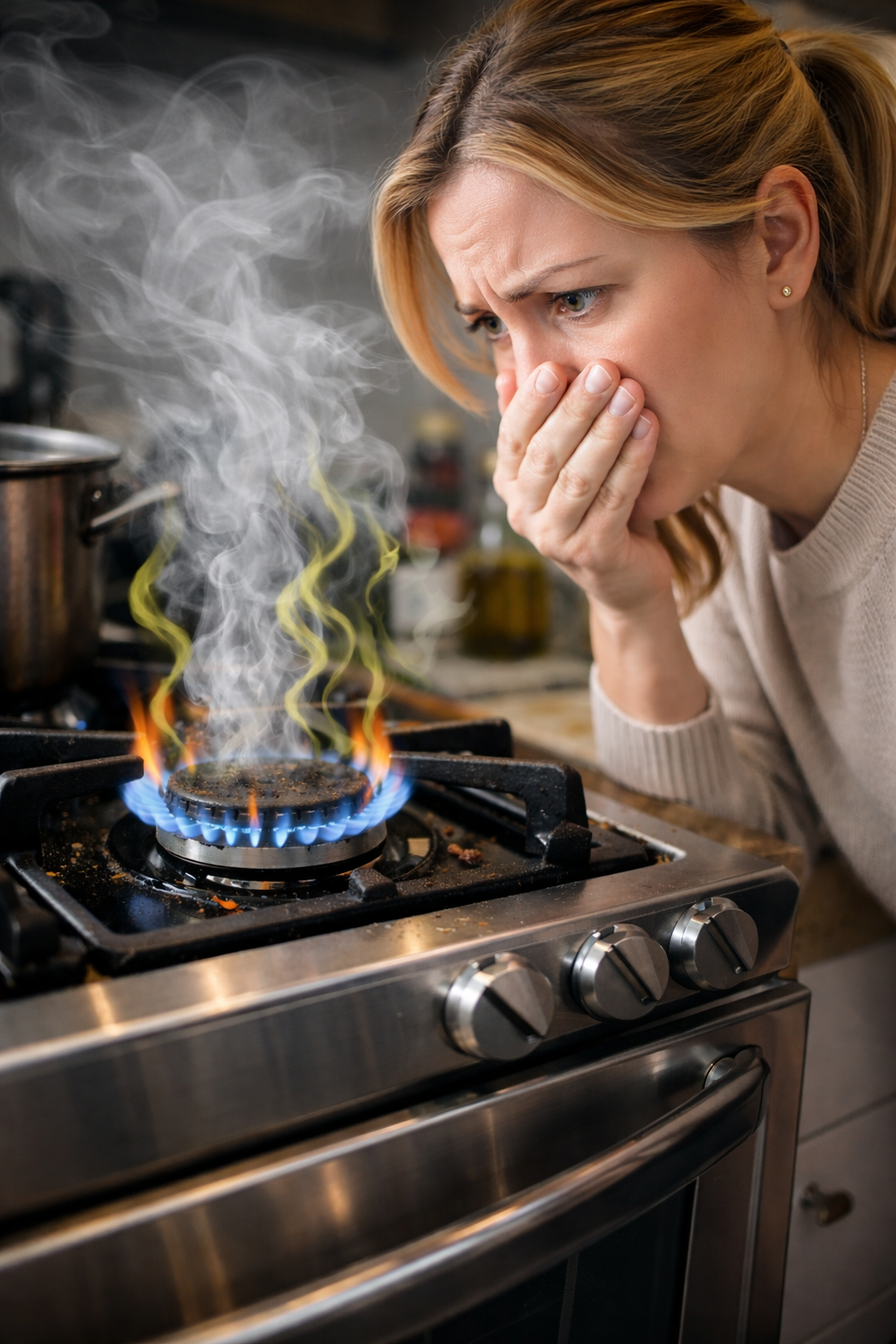
Gas stove smells like gas is one of those problems that instantly puts you in panic mode. And honestly, I don’t blame you. The first time I noticed that strong gas smell in my kitchen, I froze for a second. My brain went straight to, “Is this dangerous? Should I turn everything off? Do I need to call someone right now?”
The good news is… many times, the cause is something small and fixable. But the tricky part is knowing when it’s a quick DIY fix and when it’s a serious danger you should never ignore.
In this guide, I’ll walk you through the real reasons your gas stove smells like gas, what to check first, how to fix it safely, and the smartest products that help you stay protected (especially if you live with kids or elderly family members). Let’s fix this the right way.
Contents
First… What You Should Do Immediately (Don’t Skip This) – Gas Stove Smells
Before we talk about causes, do this quick safety checklist:
If the gas smell is strong, or your eyes are watering, or you feel dizzy:
- Turn off the stove knobs immediately.
- Open windows and doors.
- Avoid switching on/off lights or appliances.
- Get everyone out if the smell is heavy.
- If it still smells bad after a few minutes, contact your gas company or a professional.
Now, if the smell is mild and seems to happen only when cooking, it may be one of these common causes.
Cause #1: A Burner Cap Is Not Sitting Properly
This one is surprisingly common. If the burner cap is slightly out of place, gas may not flow and ignite properly. That’s when you’ll smell gas for a few seconds, especially right after turning the burner on.
What it looks like
- The flame is uneven
- It takes longer to ignite
- You smell gas for a moment when you start cooking
Fix it (takes 30 seconds)
Turn the stove off and let it cool. Then:
- Remove the grate
- Lift the burner cap
- Place it back perfectly aligned (it should sit flat)
I’ve personally seen this fix the issue instantly. The best part? It’s free and simple.
Cause #2: Clogged Burner Ports (Grease + Food Debris)
Over time, tiny burner holes (ports) get clogged with grease, crumbs, and sticky food residue. When this happens, gas flow becomes uneven and ignition gets messy… which leads to that unpleasant gas smell.
Signs of clogged ports
- Flame looks yellow or orange
- Burner struggles to light
- Clicking sound continues longer than normal
- Gas smell appears while the burner tries to ignite
Fix it safely
- Turn everything off and let it cool
- Remove burner cap and burner head
- Use a soft toothbrush to clean the holes
- Use a toothpick or a burner port cleaning needle (gently)
- Wipe with a dry cloth
If you want a simple tool for this, a burner port cleaning tool can make your life way easier.

Cause #3: Gas Leak From the Connection (Stove or Gas Line)
This is the one you should take seriously. A gas line connection can loosen over time, especially if your stove has been moved, cleaned aggressively, or installed long ago.
Warning signs
- Gas smell even when the stove is OFF
- Smell is stronger near the back of the stove
- You smell it randomly, not only while cooking
What to do (the safe way)
You don’t need to guess here. Use a simple product that most US homeowners keep at home:
✅ Gas leak detector spray
You spray it on the connections and look for bubbles. If bubbles form, you have a leak.
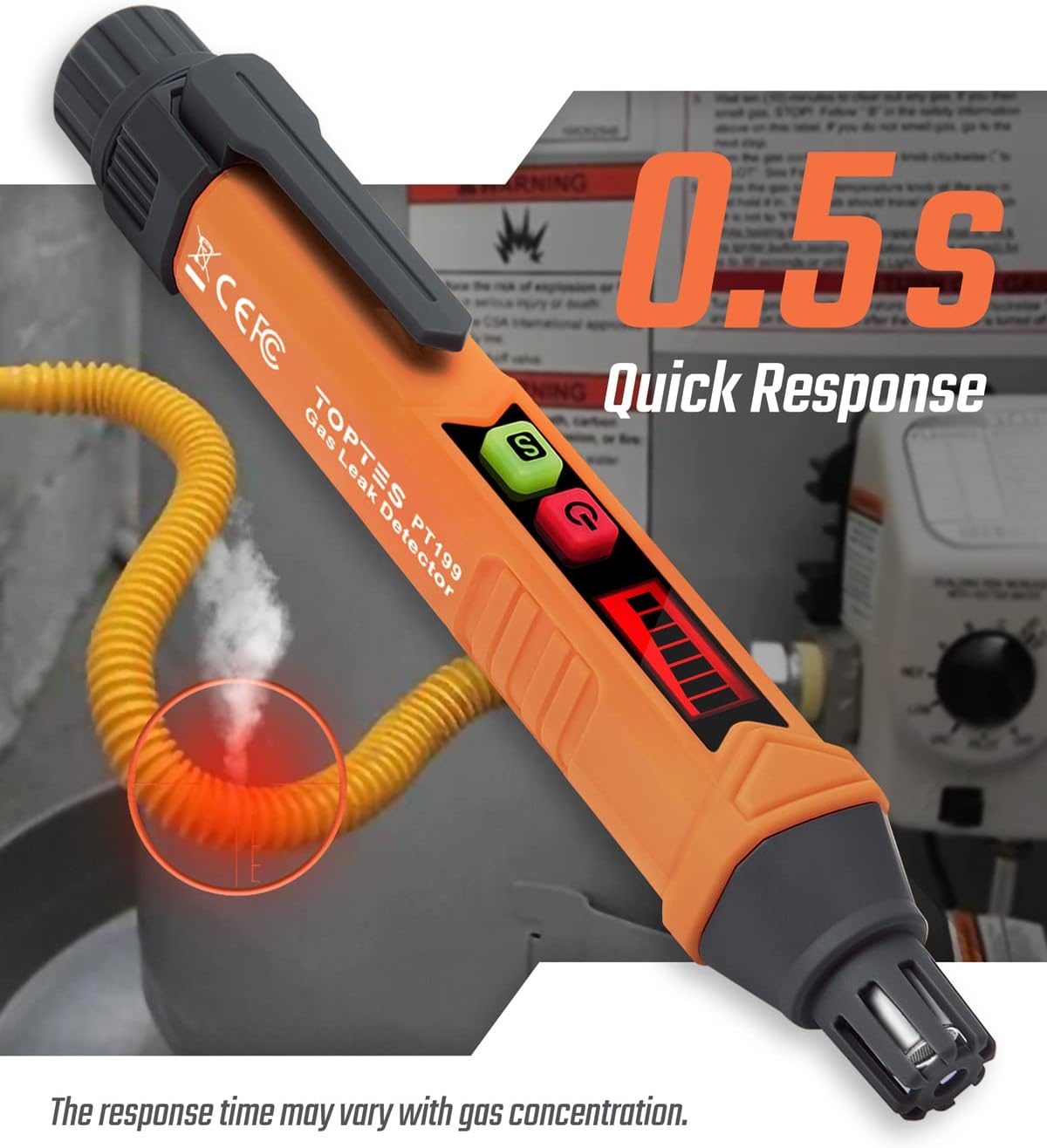
Important: If you detect a leak, turn off the gas valve and call a professional. Don’t try to “tighten and forget” unless you’re experienced.
Cause #4: The Igniter Is Weak or Dirty (Gas Builds Up Before Lighting)
Your stove’s igniter creates a spark to light the gas. If it’s weak, dirty, or damp, the gas may release for a few seconds before it lights… and that’s when you smell gas.
What you’ll notice
- Burner clicks but doesn’t light quickly
- It lights after a delay
- The smell happens right before ignition
Fix it
- Turn off the burner
- Dry the igniter area completely
- Clean around it gently with a dry toothbrush
- Make sure the burner cap is aligned
If the igniter is worn out, you may need a replacement.
Nick’s Sticks Free-Range Turkey Snack Sticks Review – Clean, High-Protein Fuel for Healthy Snacking
Cause #5: Burner Was Wet After Cleaning (Very Common!)
If you recently cleaned your stovetop using a wet cloth or spray cleaner, water may have gone into places you didn’t expect. A wet burner can delay ignition, and gas smell becomes noticeable.
This happens to people more than you’d think. You clean the stove, it looks shiny, you cook later… and suddenly gas smell shows up.
Fix it fast
- Remove burner caps
- Leave everything open for 15–30 minutes
- Use a hair dryer on low heat (optional)
- Reassemble and test
Also, avoid heavy spraying directly into the burner area. A slightly damp cloth is safer than flooding it.
Cause #6: A Faulty Gas Regulator (Low Pressure or Unstable Flow)
A regulator controls gas pressure. If it’s failing, you can get low flame, delayed ignition, and strange gas flow patterns.
Signs of regulator issues
- Low flame even on high setting
- Flame goes out randomly
- Burner struggles to stay lit
- Smell appears during unstable burning
For propane stoves, this becomes even more common.
But here’s my honest advice: regulator replacement is not a “guessing game.” If you suspect this, bring in a technician for confirmation. Safety first.
Cause #7: Stove Knob or Valve Problem (Gas Not Fully Closing)
Sometimes the problem isn’t the burner at all. It’s the knob or control valve not closing fully. Even a tiny leak from the valve can cause a low-level gas smell around the stove area.
Signs
- You smell gas even when no burners are on
- Smell is stronger near the knobs
- Knob feels loose or weird
What you can do
- Make sure knobs are fully turned off
- Remove knobs and clean behind them (grease buildup can cause sticking)
- If the valve feels faulty, stop using the stove and call for service
It’s not worth risking a valve leak.
Quick Safety Tips Most People Don’t Follow (But Should)
Let me share a few simple habits that keep your kitchen safer:
- Don’t ignore repeated gas smell, even if it’s mild.
- Never use a lighter if you suspect a leak.
- Keep windows slightly open while troubleshooting.
- Don’t overload your burner area with wet cleaning spray.
- Teach your family what to do if they smell gas.
And if you want one safety item that gives peace of mind…
✅ Natural gas detector alarm
It beeps when it detects gas. Many US homes keep one near kitchens.